
When you hear “SpaceX”, mostly you would imagine- a rocket launching company. but, the time has changed and in 2026 SpaceX has evolved over the time and now they are the landlord of the AI supercomputer, renting compute capacity to tech giants like google, anthropic. not only this, SpaceX has flagship project that would take humans to mars and make humans a multiplanetary species for the first time in 21st century. In this article, we are going to break down the core business of SpaceX and what they actually do today.
3 core Business Division of “Spacex”
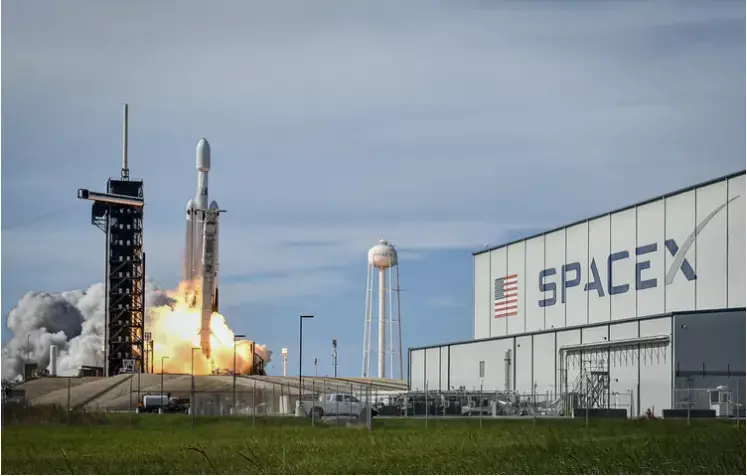
1) Space Launch
Starlink business provides broadband internet from space, and in 2025 it connected more than 4.6 million new active customers. SpaceX also reported total revenue of $18.674 billion in 2025, with Connectivity bringing in $11.387 billion and Space $4.086 billion. (starlink.com) Spacex uses the latest Falcon 9 for carrying V3 satellites, boasting a 99.99% success rate that is unbeatable in the whole world. In the past, it has carried out over 100 operations. Then we have Starship, the most advanced and powerful rocket ever in the world, which flexes by carrying heavy payloads—like entire data center clusters—and deploying them into orbit.
2)Connectivity (Starlink)
Now, this is another line of business that comes directly under SpaceX. It uses rockets like the reusable Falcon 9 to deploy massive numbers of satellites to provide broadband internet to every corner of the Earth. This single business provides recurring cash flow for SpaceX.
To date, Starlink has achieved over 10,000 satellite deployments in orbit. It is a massive success because it brings a significant global user base to Elon Musk, boasting over 12 million active users across 160 countries and adding almost 5.8% growth every month.
Furthermore, it is not limited to B2C; “Starlink” also operates in the B2B sector, securing deals ranging from aviation to government defense contracts. (Fact: SpaceX was initially a U.S. military contractor before expanding toward broader commercialization.)
3)Ai ,xAi (Colossus)
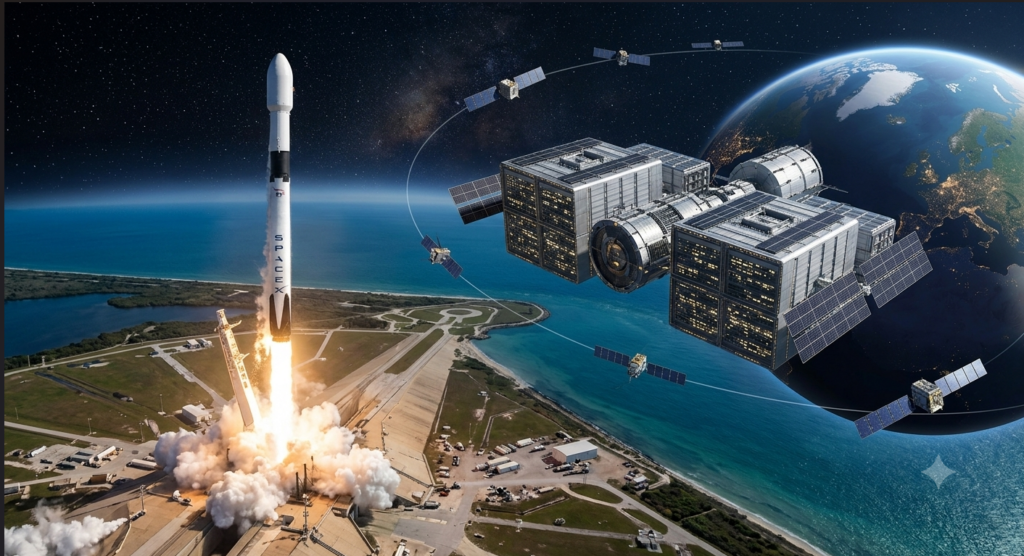
This section is most talked about SpaceX’s flagship program, “Starmind”, which is a planned constellation of AI-powered satellites functioning as a distributed orbital data center network. Anticipation around this ambitious space-based computing project contributed to SpaceX’s historic initial public offering (IPO), which propelled the company to a valuation of over $2 trillion. The initiative aims to deploy high-density AI compute capacity into low Earth orbit using heavy-payload rockets. By operating in the vacuum of space, Starmind intends to utilize abundant, unclouded solar energy and passive cooling, effectively bypassing the land, electricity, and water constraints that currently limit terrestrial data center.
But why this is big ?
Reason Behind that Because this project of “Spacex” will cut down every different part of cost that involves running, building and total overall cost of every single data centres on the earth costs like cooling, land, and electricity—these being some of the hurdles tech giants face while building data centers on Earth—if this project is successful, it will be a massive hit for SpaceX. This move will put SpaceX among the very few brands that have control over data and streamlined cost-cutting. Not only that, but Musk has explicitly said that they are going to use Nvidia’s latest chips (Nvidia Hopper and Blackwell architecture chips, such as H100/H200/GB200) and target 1 million new chips to build the world’s first coherent, gigawatt-scale AI training cluster.

The bigger picture
Orbital data centers, partnerships with TeraFab and Intel, and Starship’s crewed lunar missions—this is the perfect picture for a sci-fi movie. Honestly, we have all been waiting for this. Building such massive architecture not on Earth, but in space, will create a totally different future for humanity. We may see unique categories of products emerge, such as hyper-low-latency space compute capacity for large organizations for just £199 a month, or Mars-to-Earth communication devices. This could establish an entirely new economy for AI compute capacity.
What may go wrong ?
- Is the timeline realistic enough to matter in the current AI race?
- Will it really cut down costs, even after factoring in the expenses of launching the data centers?
- Will orbital data centers ever be economically viable compared to building on Earth?
- Can SpaceX keep launch costs low enough that tech giants can afford to send entire data centers into space?
- Is cooling high-density AI servers in the vacuum of space scientifically feasible?
- Will Starmind create an unregulated monopoly in space?
- Will 1 million massive satellites create an orbital traffic and debris crisis?
Leave a Reply