
What Is a Backlink?
A backlink, also known as an “inbound link” or “incoming link,” is simply a link created when one website links to another. Think of it as a digital vote of confidence. When Website A places a hyperlink on its page that points to Website B, Website B has received a backlink from Website A. Search engines like Google treat these links as signals of trust and authority. The more high-quality backlinks your site earns, the more likely Google is to view your content as valuable and relevant, which directly impacts where you rank in search results. To put it in everyday terms, imagine you are looking for a great restaurant in a new city. If one person recommends a place, you might be mildly interested. But if dozens of people, including food critics and locals, all point you to the same restaurant, you become far more confident that it is worth visiting. Backlinks work the same way for search engines. They serve as endorsements from other websites, telling Google that your content is credible, useful, and worth surfacing to users who are searching for related topics.
Why Backlinks Matter for SEO
Backlinks have been a cornerstone of Google’s ranking algorithm since the late 1990s, and they remain one of the top three ranking factors today alongside content quality and user experience. Google’s original PageRank algorithm was built almost entirely on the concept of link equity, the idea that the quantity and quality of links pointing to a page determine its importance. While the algorithm has evolved dramatically over the years, the fundamental principle holds true: links are still one of the strongest signals Google uses to assess a page’s relevance and authority.
Types of Backlinks You Need to Know
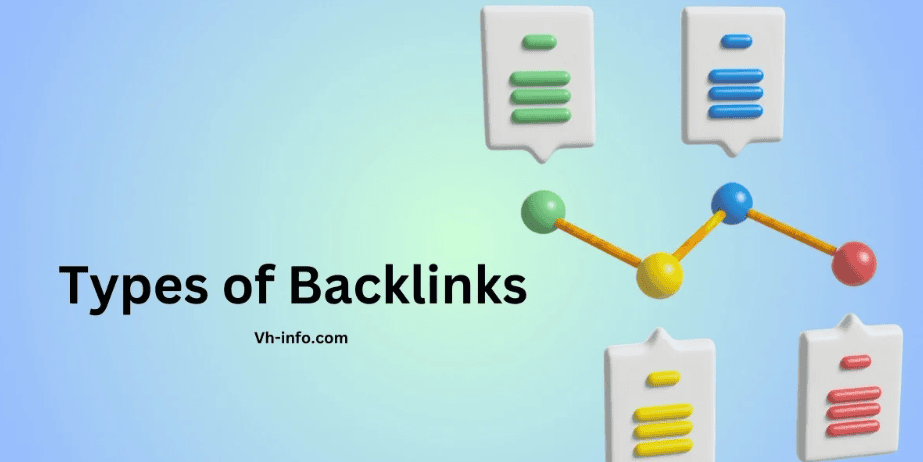
Dofollow
links are the standard type of backlink. They pass link equity (often called “link juice”) from the referring site to your site, directly influencing your search rankings. By default, all links are dofollow unless specified otherwise. These are the links you want to focus on building because they carry the most SEO weight.
Nofollow Links
links contain a special HTML tag (rel=”nofollow”) that tells search engines not to pass link equity. While these links do not directly boost your rankings, they are still valuable. They drive referral traffic, increase brand exposure, and contribute to a natural-looking link profile. Google has also suggested that nofollow links may still play an indirect role in ranking, so they should not be dismissed entirely.
Natural
Natural backlinks are earned organically when other websites find your content valuable and link to it without any action on your part. These are the most powerful type of backlink because they signal genuine endorsement.
Editorial
Editorial links are similar but occur when a writer or editor within a publication specifically chooses to reference your content as a source within an article
Manual Links
Manual or self-built links are those you actively create through strategies like guest posting, directory submissions, or outreach campaigns. While manual links are legitimate when done correctly, over-reliance on them can appear manipulative to search engines if not balanced with natural link acquisition.
How to Generate Backlinks: Proven Strategies That Work
backlinks is not about chasing quantity. A single backlink from a high-authority website like The New York Times or a leading industry blog can be worth more than hundreds of links from low-quality directories. Here are some of the most effective, white-hat strategies for generating backlinks that will actually move the needle for your SEO.
1. Create Link-Worthy Content
The foundation of any successful backlink strategy is content that people naturally want to link to. This includes comprehensive guides, original research and data studies, infographics, interactive tools, and thought-provoking opinion pieces. When you publish something truly unique and valuable, other websites will reference it as a source, earning you natural backlinks without any outreach required. Focus on creating what others in your industry are not offering, whether that is a deeper analysis, a new perspective, or a useful resource that solves a real problem for your audience.
2. Guest Blogging
Guest blogging involves writing articles for other websites in your industry in exchange for a backlink to your site within the content or author bio. This strategy works because it benefits both parties: the host site gets free, high-quality content, and you get exposure to a new audience along with a valuable backlink. The key is to target reputable, relevant websites with genuine audiences. Avoid low-quality sites that accept any content, as links from these can actually hurt your SEO. Always focus on providing genuine value in your guest posts rather than treating them as mere link-building opportunities.
3. Broken Link Building
This strategy involves finding broken links on other websites and reaching out to suggest your own content as a replacement. It is a win-win approach: you help the website owner fix a broken link that creates a poor user experience, and you earn a relevant backlink in return. Use tools like Ahrefs, SEMrush, or Check My Links (a free Chrome extension) to find broken links on authoritative sites in your niche. When you reach out, be polite, point out the specific broken link, and explain how your content serves as a suitable replacement.
4. Skyscraper Technique
Popularized by Brian Dean of Backlinko, the Skyscraper Technique involves finding top-performing content in your niche, creating something significantly better, and then reaching out to the sites linking to the original content to suggest they link to your improved version instead. The key word here is “significantly better.” Simply rewriting an existing article will not cut it. You need to add more depth, better visuals, updated data, or a unique angle that makes your content clearly superior to what is already ranking.
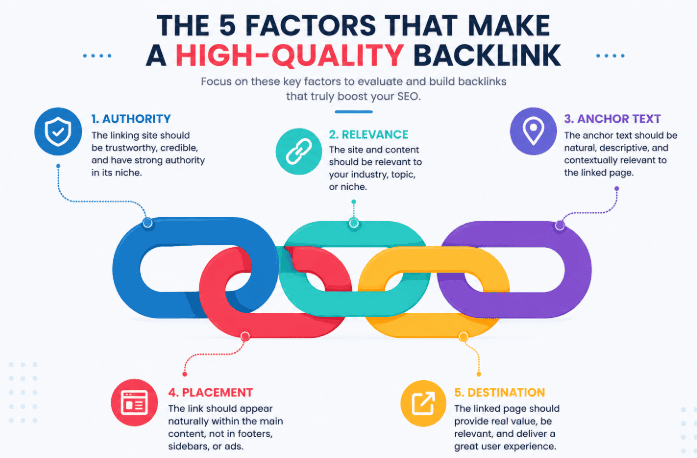
Key Elements of a Quality Backlink
Understanding what makes a backlink valuable is just as important as knowing how to build them. Here are the critical quality factors that determine the SEO impact of any given backlink:
Domain Authority: Links from websites with high domain authority (DA) carry significantly more weight than those from low-DA sites. A single link from a site like Forbes or Wikipedia can be more impactful than dozens of links from unknown blogs. Always prioritize link opportunities from authoritative, well-established websites in your industry
Relevance: The linking website’s topical relevance to your content matters enormously. A backlink from a well-known marketing blog is far more valuable for a digital marketing site than a link from a cooking forum, even if both sites have similar domain authority. Google uses relevance as a context signal to determine whether a link is a genuine endorsement.
Anchor Text: The clickable text of a hyperlink, known as anchor text, provides search engines with context about the linked page. Ideally, your anchor text should include relevant keywords without being overly optimized. A natural mix of branded anchor text, partial-match keywords, and generic phrases like “click here” creates the most natural and effective profile.
Placement: Where the backlink appears on the page matters. Links embedded within the main body content of a page carry more weight than links buried in footers, sidebars, or comment sections. A contextual link surrounded by relevant, supporting text signals to Google that the link is a meaningful recommendation rather than a paid or manipulative
Link Uniqueness: Getting multiple backlinks from the same domain has diminishing returns. While a second or third link from the same site still provides some value, the most significant SEO benefit comes from earning links from a diverse range of unique domains. Focus on expanding your backlink profile breadth rather than repeatedly targeting the same websites.
Common Backlink Building Mistakes to Avoid.
While building backlinks is essential, doing it the wrong way can lead to severe penalties from Google that can tank your rankings for months or even years. One of the biggest mistakes is buying backlinks. Google explicitly prohibits buying or selling links that pass PageRank, and getting caught can result in a manual action that devastates your organic traffic. Another common pitfall is participating in link exchange schemes or private blog networks (PBNs), which are also against Google’s Webmaster Guidelines.
Additionally, many beginners make the mistake of prioritizing quantity over quality. Spamming comment sections, submitting to thousands of low-quality directories, or using automated link-building tools might seem like a fast track to better rankings, but these tactics almost always backfire. Google’s algorithms have become remarkably sophisticated at detecting manipulative link practices. Instead, focus on building genuine relationships with other website owners, creating content worth linking to, and earning backlinks through merit rather than manipulation. Patience and consistency are the real secrets to a strong backlink profile.
Related guide: New to search optimization? Read What Is SEO? A Beginner’s Guide to Ranking on Google.


Leave a Reply